Quick Summary
- Omnichannel marketing creates one seamless, synchronized customer journey across email, social media, and messaging apps, rather than treating each channel in isolation the way multichannel marketing does.
- Companies with strong omnichannel customer engagement retain an average of 89 percent of customers, compared to just 33 percent for weak omnichannel strategies, according to Invespcro.
- Messaging channels like WhatsApp, Telegram, and Instagram Direct deliver open rates up to 98 percent, making them one of the highest-performing tools in a modern marketing stack, according to Gartner.
- Meta Ads using a "Click to WhatsApp" objective merge paid discovery with instant conversational engagement, letting automated workflows qualify and route leads immediately.
- The biggest omnichannel marketing trend to watch is AI-driven conversational marketing that recalls purchase history and personalizes replies in real time.
In the contemporary digital landscape, the way businesses communicate with their target audience has fundamentally transformed. Customers no longer rely on a single medium to interact with their favorite brands. Instead, they jump seamlessly between social media, search engines, websites, and messaging applications. To capture attention and build lasting loyalty, businesses must adapt by creating a unified and consistent customer journey. This is where omnichannel marketing becomes absolutely essential.
Focusing heavily on messaging platforms like WhatsApp, Telegram, and regional e-commerce chats, this comprehensive guide will explore how modern businesses can optimize their outreach. A solid messaging strategy is the backbone of customer engagement. Furthermore, establishing a strong foundation in this area is a critical cluster topic that ties directly into implementing robust omnichannel support software for your business operations. By aligning your marketing and support systems, you can create an unstoppable engine for business growth.
What is Omnichannel Marketing?
When modern entrepreneurs evaluate their digital growth strategies, a common question arises: exactly what is omnichannel marketing? To understand this concept, we must look beyond simply having active accounts on various social media platforms. So, what is omnichannel marketing in a practical sense? It is a highly integrated, customer-centric strategy that ensures a completely seamless experience across every single touchpoint a customer interacts with. Whether the customer is reading an email, clicking a Meta Ad, or chatting with a business on WhatsApp, the brand voice, offers, and contextual history remain entirely consistent.
The formal omnichannel marketing definition revolves around breaking down the traditional silos that separate different marketing and sales departments. According to the standard omnichannel marketing definition, the customer is placed at the absolute center of the strategy. Instead of treating a website visit, a physical store purchase, and a social media inquiry as separate events, this methodology connects them into one continuous narrative. If a customer leaves an item in their cart on your website, they might receive a friendly reminder via a messaging app a few hours later. This level of synchronization is what defines a true omnichannel marketing strategy. It relies heavily on integrated data, reliable software infrastructure, and a deep understanding of consumer behavior.
Omnichannel vs Multichannel Marketing: Understanding the Difference
It is very easy to confuse different marketing terminologies, which is why exploring omnichannel vs multichannel marketing is vital for any growing business. While both strategies involve using multiple platforms to reach potential buyers, the core philosophy behind each is completely different. In a multichannel system, a brand might use email, social media, and SMS, but these channels operate independently. The social media team does not share data with the email marketing team.
When analyzing omnichannel vs multichannel marketing, the primary distinction is integration. Multichannel focuses on maximizing the performance of each specific platform in isolation. Omnichannel marketing, on the other hand, focuses entirely on the customer experience as they transition between platforms. For example, if a user clicks a Facebook advertisement and is directed to a WhatsApp chat, an omnichannel setup ensures the sales representative already knows which specific advertisement the user clicked. This prevents the customer from having to repeat themselves, which drastically reduces friction in the sales funnel. Research indicates that highly integrated approaches yield better results. According to a statistic published by Invespcro, companies with strong omnichannel customer engagement retain on average 89% of their customers, compared to a 33% customer retention rate for companies with weak omnichannel strategies.
The Power of Messaging in Omnichannel in Marketing
The integration of direct messaging has completely revolutionized omnichannel in marketing. Traditional methods like email and generic social media posts often suffer from low engagement rates. However, leveraging messaging applications within your marketing ecosystem provides a direct, intimate, and highly responsive line of communication. Utilizing omnichannel in marketing through messaging means meeting your customers exactly where they already spend hours of their day.
Platforms driven by the WhatsApp Business API have become powerhouses for this exact purpose. By connecting a robust API to your customer relationship management system, you can send personalized, automated broadcast messages that do not violate spam policies. It is crucial to focus on targeted, segmented messaging campaigns rather than generic blasts to maintain policy compliance and protect your account health. When a customer replies to a promotional message, the conversation can instantly transition into a sales consultation or a customer support ticket.
Beyond WhatsApp, integrating platforms like Telegram, Facebook Messenger, and Instagram Direct adds immense value. For retail and e-commerce businesses operating in Southeast Asia, connecting Shopee Chat and Lazada Chat into your central communication hub is a game changer. Instead of logging into five different seller centers, your team can manage all marketing inquiries from one interface. Messaging boasts incredibly high visibility. A report by Gartner highlights that SMS and direct messaging open rates can reach as high as 98%, making it an indispensable asset for any serious digital marketing campaign.
Omnichannel Strategies with 3 Common Approaches
The first approach is to develop a social media strategy for each channel. This is the most time-consuming of the three approaches. The second approach is to develop a social media strategy for all channels and then prioritize which channels are best for marketing based on their performance. The third approach is to use one social media channel and optimize it as much as possible.
Approach 1: Develop a Social Media Strategy for Each Individual Channel
This approach has the most time-intensive, but also has the highest potential payoff of all three approaches.
Approach 2: Develop a Social Media Strategy for All Channels and Prioritizing Which Channels Are Best For Marketing
This approach can be easier than Approach 1 because it doesn’t require as many resources, but it also doesn’t have as high of a potential payoff.
Approach 3: Using One Social Media Channel and Optimizing It As Much As Possible
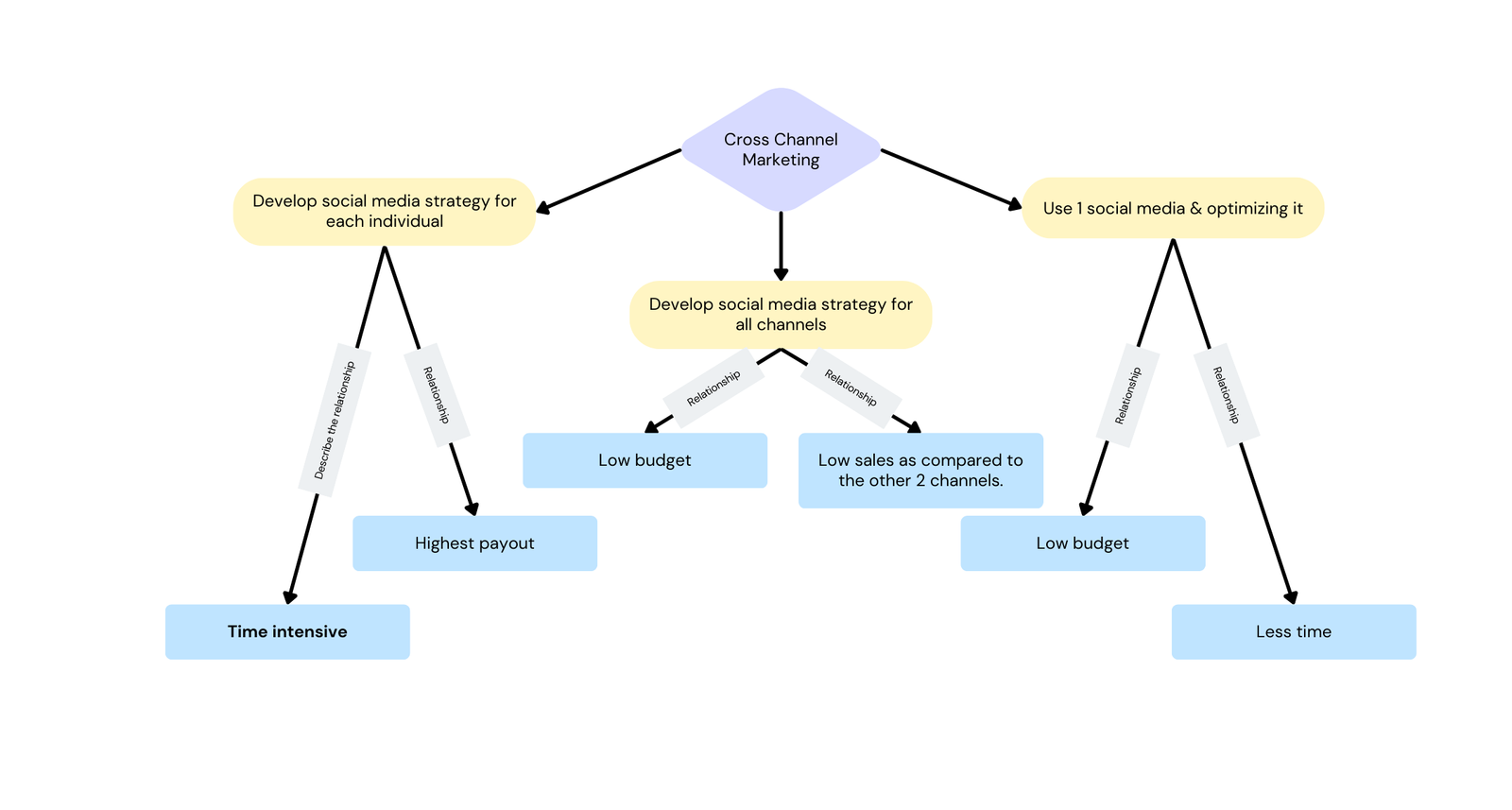
This approach can be very effective if you have limited resources or time because you only have to focus on one channel. Social media channels that are good fits for this approach are Twitter and Instagram.
- Understand the audience – Choose a person in your life who could be a potential follower of your account, someone who likes similar content as you do and would probably be interested in what you have to say
- Select one platform – Twitter or Instagram, whichever platform makes sense for your target audience
- Build an engaging profile – Include relevant hashtags in your profile
Proven Omnichannel Marketing Strategies for Business Growth
Developing effective omnichannel marketing strategies requires careful planning and a deep understanding of your data. The first step is mapping the entire customer journey. You need to identify exactly how a prospect discovers your brand, what channels they prefer for research, and where they ultimately make a purchase.
One of the most effective omnichannel marketing strategies involves synchronizing your paid advertising with your conversational commerce channels. For example, running Meta Ads that utilize the “Click to WhatsApp” objective is a brilliant way to merge discovery with immediate engagement. Once the prospect initiates the chat, automated workflows can categorize their needs, capture their contact details, and route them to the appropriate human agent or AI chatbot.
To refine your omnichannel marketing approach, you must prioritize data centralization. If your website analytics, Meta Ads Manager data, and messaging logs are kept separate, you cannot provide a unified experience. A successful omnichannel marketing approach relies on a central dashboard where every interaction is logged. This allows you to personalize future communications. If a customer recently purchased a specific software service or booked a vehicle inspection, your subsequent marketing messages should reflect that history rather than offering them the exact same service again. Personalization is no longer a luxury; it is a strict consumer expectation in the modern marketplace.
Omnichannel Marketing Case Studies in Action – Lululemon Athletica
Lululemon is a Canadian-based athletic apparel company that focuses on yoga and running clothes. Lululemon has been able to grow its company through the use of cross-channel marketing.
In the past, Lululemon relied heavily on in-person interactions with customers to generate sales. They would have in-store promotions and events that would bring in customers and increase sales. This was their primary way of marketing their products. But with the rise of social media, this was not enough for them to keep up with other companies like Nike who were just beginning to make a mark in the industry.
To keep up with the competition, Lululemon had to implement a new strategy which was cross-channel marketing. They began by creating an online presence on Facebook and Twitter which allowed them to reach more people without having physical stores or distribution outlets across North America. With these new channels, they were able to give people access to their products without having them come.
Inspiring Omnichannel Marketing Examples and Campaigns
Looking at real-world applications helps solidify these concepts. There are many fantastic omnichannel marketing examples that demonstrate how messaging can bridge the gap between digital and physical experiences. Consider a modern retail brand that uses an integrated messaging API. A customer might browse products on the brand’s Instagram page and send a direct message asking about sizing. The automated system provides the size guide and asks for the user’s location. The system then sends a follow-up WhatsApp message confirming that the item is in stock at their local physical store.
Another one of the best omnichannel marketing examples involves the food and beverage industry. Imagine a popular coffee chain or pizza franchise. A customer might see a promotion on a digital billboard, scan a QR code, and be redirected to a Telegram bot. The bot takes their order, processes the payment, and sends live updates about the delivery status.
When examining successful omnichannel marketing campaigns, we often see a strong reliance on cross-platform retargeting. If a user interacts with a WhatsApp promotional message but does not complete the purchase, well-executed omnichannel marketing campaigns will automatically trigger a customized Meta Ad to appear on their Facebook feed the next day. This gentle, persistent reminder system keeps the brand at the top of the consumer’s mind without feeling intrusive.
What are the Challenges Facing Omnichannel Marketing?

Cross-channel marketing is a strategy that has been around for decades. It is the process of combining different channels to promote a product or service.
The challenges faced by cross-channel marketing strategies are:
- The lack of data and analytics tools to help marketers identify the best channels to use
- The difficulty of measuring ROI on each channel separately, as they all work together to drive sales.
- The lack of time and resources needed to integrate these channels into one cohesive strategy.
Tips for Implementing Omnichannel Marketing in Your Business
Omnichannel marketing is a technique that enables marketers to promote the same product or service in different channels. It is a strategy that integrates various channels of digital marketing such as email, social media, and search engine optimization (SEO) to reach customers.
Some tips for implementing cross-channel marketing in your business are:
- Creating a cross-channel messaging system: It’s important to develop a consistent message across your channels so that you don’t confuse your customers. For example, if you have an email campaign with a specific offer, then you should have the same offer on your website and social media.
- Creating an analytics dashboard: You need a system where you can track all of your campaigns and see which ones are working best for you. This will help you determine which channels to focus on when it comes time for budgeting next year.
- Developing an editorial calendar: You should have certain days set aside.
Essential Omnichannel Marketing Platforms and Tools
To execute these complex workflows, you need the right technology. Attempting to manage multiple communication streams manually is inefficient and prone to errors. This is why investing in dedicated omnichannel marketing tools is mandatory for scaling your operations. These tools automatically synchronize customer data, manage message routing, and provide detailed analytics dashboards to track your return on investment.
The most effective omnichannel marketing tools allow you to integrate seamlessly with your existing infrastructure. This means connecting your WordPress site, your custom CRM, and your messaging protocols into one environment. When evaluating omnichannel marketing platforms, it is vital to choose software that supports the specific channels your target audience uses. For businesses focused on conversational commerce, choosing a platform that natively supports the WhatsApp Business API, Telegram, and regional marketplaces is essential.
This is exactly where solutions like oChats excel. As one of the premier omnichannel marketing platforms available today, oChats allows you to consolidate WhatsApp, Telegram, Facebook Messenger, Instagram, Shopee Chat, and Lazada Chat into a single, highly efficient workspace. By utilizing such software, you can launch targeted promotional messages, track customer responses, and manage support tickets simultaneously. According to McKinsey research, companies that excel at personalization and automated customer journeys generate significantly faster revenue growth than their peers. Leveraging a unified platform ensures you can deliver that personalized experience at scale.
Future Omnichannel Marketing Trends to Watch
The digital landscape is constantly shifting, and staying ahead of omnichannel marketing trends is crucial for maintaining a competitive edge. One of the most prominent omnichannel marketing trends is the integration of advanced Artificial Intelligence and Large Language Models into conversational marketing. AI is no longer just for simple scripted chatbots. Modern AI can analyze the sentiment of a customer’s message, recall their past purchase history, and generate highly personalized, human-like responses in real time.
Furthermore, we are seeing a rise in the use of localized search engine optimization tied directly to messaging. Businesses are optimizing their Google Business Profiles so that local searchers can launch a messaging conversation directly from the search results page. As privacy regulations continue to evolve, zero-party data gathered directly through conversational interfaces will become the most valuable asset for marketers looking to build highly targeted campaigns.
Conclusion: Fostering Sustainable Growth
Adopting a comprehensive strategy is essential for businesses seeking to thrive in today’s fiercely competitive landscape. By enhancing the customer experience, increasing brand visibility, and improving resource allocation, omnichannel marketing provides a robust framework for long-term success. As consumer behavior continues to demand instant, seamless communication, brands that embrace this integrated approach will be perfectly positioned to foster deep customer loyalty. To truly leverage the power of unified communication, you can always start with oChats, a premier cross-channel business messaging software. Ensure you also explore how this integrates with your overall customer service strategy by visiting our comprehensive guide on omnichannel support software to complete your digital transformation today.